Winter ENT illnesses: sore throat, bronchitis, laryngitis, sinusitis…
Minor respiratory discomforts are part of everyday life: scratchy throat, stuffy nose, persistent cough, hoarse voice...
Colds, tonsillitis, bronchitis, laryngitis, sinusitis: these ENT conditions are common, often benign, but sometimes genuinely painful to experience.
Good news: nature has more than one remedy up its sleeve. Medicinal plants, bee products, simple gestures, and traditional recipes can provide effective relief... provided you have the right reflexes.
At MerveilleNature, we like to get back to basics: listening to the body, supporting its defenses, and gently assisting it.

Why do we catch so many ENT ailments in winter?
Cold, humidity, lack of light, fatigue, and seasonal viruses put our respiratory system to the test. Mucous membranes dry out, immune defenses weaken... and viruses take advantage.
The majority of winter ENT conditions are viral in origin.
And today, we know: antibiotics are not automatic.
This is where natural remedies regain their full importance.
Good habits to strengthen your immunity
Before even talking about symptoms, let's talk prevention:
-
Course of echinacea, ginger, or thyme
-
Bee products: honey, propolis, pollen
-
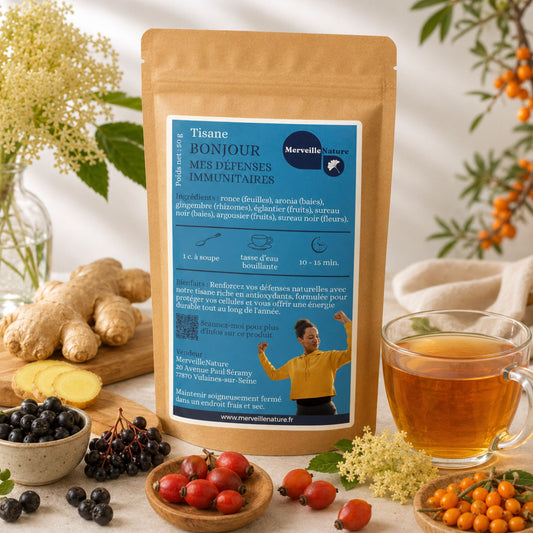
Warming herbal teas (ginger, cinnamon, elderberry)
-
Sleep, hydration, fresh air (yes, even in winter!)
A well-prepared ground is already a head start on viruses.
Tonsillitis: when the throat sounds the alarm
Intense sore throat, burning sensation, difficulty swallowing... tonsillitis is one of those winter ailments that we recognize immediately. It is an inflammation of the throat, which can affect the pharynx, tonsils, or soft palate. The result: every swallow becomes unpleasant, sometimes frankly painful.
Under the term "tonsillitis" are actually hidden several different situations. The inflammation can concern only the pharynx - we then speak of pharyngitis - or more specifically affect the tonsils, which corresponds to tonsillitis in the strict sense. Depending on their appearance, we classically distinguish red tonsillitis (red and inflamed tonsils) and white tonsillitis (presence of whitish deposits).
Good news: in the majority of cases (50 to 90%), tonsillitis is viral in origin. It then evolves favorably with rest and appropriate care, particularly natural. More rarely, it can be bacterial. Certain forms, due to group A streptococcus, require particular vigilance due to the risk of complications (articular, cardiac or renal), and then justify medical advice.
The challenge is therefore to relieve inflammation, help the body defend itself naturally, while knowing when to consult.
Natural remedies for tonsillitis
Gargles (essential)
Gargles help locally disinfect the throat and soothe inflammation.
-
Saltwater gargle
Dissolve 1 tablespoon of sea salt in a glass of lukewarm water.
Gargle several times a day. -
Sage, honey, and apple cider vinegar gargle
Prepare a sage tea, then add
• 1 teaspoon of apple cider vinegar
• 1 teaspoon of honey
Use this preparation as a gargle throughout the day.
Often, improvement is noticeable by the next day. -
Blackberry leaf gargles and herbal tea
Put a good handful of blackberry leaves in 1 liter of cold water, bring to a boil, let boil for 2 minutes, then remove from heat.
Let infuse for 10 minutes, strain.
Both to drink during the day and to use as gargles.

Beneficial herbal teas
-
Ginger tea
Grate the equivalent of one teaspoon of fresh ginger into a cup.
Pour boiling water over it, let steep for 10 minutes.
You can add a little lemon juice and honey. -
Sage tea
Infuse the sage covered for 10 minutes.
Drink 2 to 3 cups a day.
The treasures of the hive: propolis
A true natural antibiotic, propolis is particularly effective against throat infections, but also for certain skin problems.
Beekeepers observed its benefits: they simply had to chew raw propolis to avoid sore throats.
Today, propolis is available in different forms:
mouth spray, chewing gums, tinctures, capsules, etc.
Synergy of essential oils (external use)
This synergy of essential oils has anti-infectious, anti-inflammatory, and analgesic properties. It is used as a local application, in addition to oral treatment, to relieve sore throats, pain, inflammation, and cough.
Composition of the mixture
-
Essential oil of radiata eucalyptus (Eucalyptus radiata): 3 ml
-
Essential oil of lemon eucalyptus (Eucalyptus citriodora): 3 ml
-
Essential oil of Roman chamomile (Chamaemelum romanum): 3 ml
-
Essential oil of bay laurel (Laurus nobilis): 3 ml
-
Oily base: calophyllum inophyllum oil + calendula oil macerate (50/50)
→ top up to 100 ml
👉 Practical benchmark: 1 ml = 25 drops
Usage
Apply 3 to 5 drops of the mixture to the neck and upper chest (possibly the back, over the lungs).
Repeat 3 to 5 times a day, for 4 to 6 days, depending on the evolution of symptoms.
Precautions for use
-
Not recommended during the first 3 months of pregnancy.
-
Always perform a skin patch test before first use.
-
External use only.
Bronchitis: when the bronchi become inflamed
Bronchitis corresponds to an inflammation of the mucous membrane lining the inside of the bronchi. Most often of infectious origin, it can be aggravated by inhaling irritants, particularly tobacco smoke or pollution.
It generally manifests as a persistent cough, sometimes painful, accompanied by fever, a feeling of chest tightness, and, in some cases, respiratory discomfort. When these episodes recur over time, it is referred to as chronic bronchitis.
The phytotherapy approach aims to support the body on two levels:
-
internally, by helping to thin and eliminate secretions,
-
respiratorily, through inhalations and aromatic essences.
We then prioritize plants with balsamic (soothing mucous membranes), mucolytic (thinning mucus), expectorant, and anti-infectious properties, to calm coughs and facilitate breathing.
Natural remedies for bronchitis
Expectorant and soothing syrups
Black radish syrup
Cut the black radish into thin slices and arrange them in a container.
Cover with unrefined cane sugar, then let macerate for a few hours to overnight.
Collect the formed juice and take 1 tablespoon every hour in case of a productive cough.
Onion syrup
In a saucepan, cook over low heat for about 3 hours:
-
500 g fresh onions cut into pieces
-
150 g honey
-
370 g sugar
-
1 liter water
Let cool, strain, and bottle.
Take 1 tablespoon, 3 to 6 times a day for bronchitis.
Garlic syrup
Peel 50 g of garlic cloves and boil them in the equivalent of one glass of water for 2 minutes.
Then add 50 g of honey and mix well.
Take 1 teaspoon, 2 to 3 times a day, to calm coughs and support immunity.
Violet syrup
In a saucepan (preferably enamel), put:
-
100 g violet flowers (fresh or dry)
-
400 g honey
-
300 ml water
Heat gently until it reaches the consistency of a syrup, then strain.
Take 2 to 3 spoons a day.
Soothing herbal teas for the bronchi
Mullein tea
Use 2 tablespoons of dried flowers for 1 cup of hot water.
Cover and let infuse for 10 to 15 minutes, then strain very carefully (the flowers contain fine irritating hairs).
Drink 3 to 4 cups a day, preferably between meals.
Marshmallow tea
Infuse 1 teaspoon of dried leaves or flowers per cup of hot water for 10 minutes.
Take 3 to 4 cups a day.
Marshmallow is an emollient plant, rich in mucilages, which soothe mucous membranes. It is particularly indicated in cases of throat and respiratory tract irritation.
Soothing flower tea
Mix:
-
30 g mallow flowers
-
30 g violet flowers
-
30 g mullein flowers
Infuse 25 g of the mixture in 1 liter of boiling water for 10 minutes, then strain carefully.
Drink 3 to 4 cups a day.
Laryngitis: when the voice becomes fragile
Laryngitis is an inflammation of the larynx, the part of the trachea where the vocal cords are located. It most often occurs after a cold, an infection, vocal fatigue (overused voice), or after consuming very cold drinks.
It manifests as a hoarse, rough, or extinguished voice, sometimes leading to an almost total loss of voice. Swallowing can become difficult, and a cough may also accompany the inflammation.
To promote healing, the golden rule is vocal rest. It is essential to refrain from speaking, and even whispering: contrary to popular belief, whispering strongly strains the vocal cords and can slow down their recovery. Silence remains the best ally for regaining one's voice.
Natural remedies for laryngitis
Steam inhalations
Inhalations help to humidify the mucous membranes, soothe inflammation, and promote voice recovery.
Pour hot water into a bowl, place your face over it, and cover your head with a towel.
Breathe slowly and deeply for 5 minutes, 2 to 4 times a day.
👉 Optionally, you can add 2 to 3 drops of essential oil with antiseptic and anti-inflammatory properties, such as:
-
true lavender
-
eucalyptus
-
ravintsara
(Always be cautious with essential oils and avoid them for young children.)
Mullein gargle
Mullein is recognized for its soothing and calming action on the vocal cords, particularly useful in cases of voice loss.
Put 1 good tablespoon of mullein flowers and leaves in 20 cl of water.
Heat, let boil for 3 to 4 minutes, then remove from heat.
Strain very carefully before use.
Use this preparation as a gargle, several times a day.
Whooping Cough
Whooping cough is an epidemic and highly contagious disease, characterized by spasmodic coughing fits that can last several weeks. Plants can be used to relieve coughing and facilitate breathing.
Useful Plants
-
Poppy: the petals can be consumed as an infusion or syrup to soothe coughs.
-
Wild Thyme: the flowering tops in infusion help calm spasms and facilitate expectoration.
-
Black Radish: black radish syrup remains an effective remedy for thinning mucus and relieving coughs.
Eucalyptus Inhalations
Inhaling eucalyptus steam helps clear the respiratory tract:
-
Method 1: Boil 10 g of eucalyptus leaves in one liter of water and inhale the steam, using an inhaler or under a towel, 2 to 3 times a day.
-
Method 2: Add 5 drops of eucalyptus essential oil to a bowl, cover with boiling water, and inhale the hot vapors.

Rhinitis and Sinusitis: Two Closely Related Inflammations
Rhinitis corresponds to an inflammation of the nasal mucosa, while sinusitis affects the sinus cavities. These two conditions are often linked: persistent rhinitis can hinder sinus drainage and promote the onset of sinusitis. This is why we often speak of rhinosinusitis.
👉 Rhinitis: nasal discharge, sneezing, stuffy nose.
👉 Sinusitis: facial pain or pressure, headaches, thick discharge, sometimes fever.
Common Points in Treatment
-
Hydration and humidification: drink plenty of water, humidify the air.
-
Nasal rinses with saline solution: to remove mucus, allergens, irritants.
-
Rest and symptomatic care: relieve congestion, reduce fatigue.
-
Plants and inhalations: eucalyptus, mint, thyme, chamomile can help thin mucus and calm inflammation.
However, sinusitis often requires more prolonged management, especially if pain or fever persists.
Nasopharyngitis (Common Cold): The Most Common Winter Inflammation
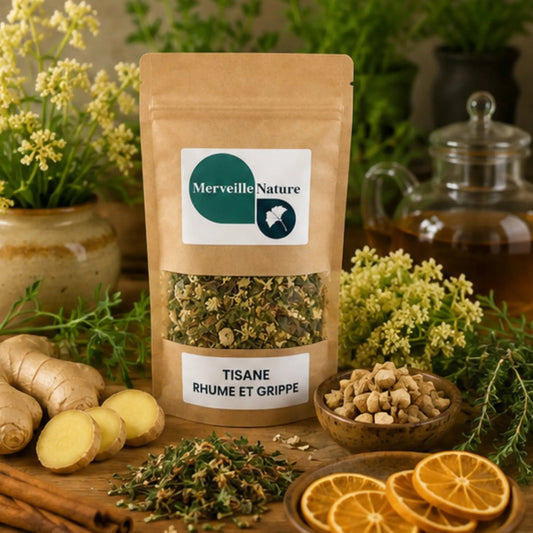
Nasopharyngitis, more commonly known as the common cold, is a benign but very frequent viral infection that affects both the nasal mucosa (rhinitis) and the pharynx (pharyngitis). It appears mainly during the first cold snaps, when the immune system is weakened. A stuffy or runny nose, sneezing, irritated throat, coughing, general fatigue, and sometimes a slight fever are its characteristic signs.
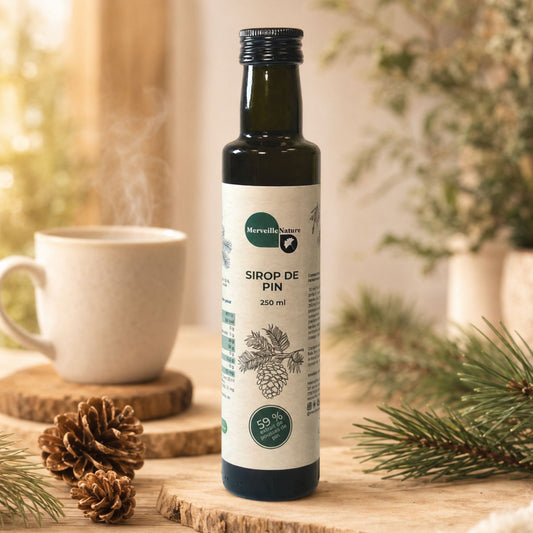
While the cold usually heals spontaneously, medicinal plants can relieve its symptoms, clear the respiratory tract, and support immunity. Herbal teas of ginger or thyme, pine shoots with expectorant and antiseptic properties, elderberry to boost natural defenses, or even mullein to soothe coughs: phytotherapy offers simple and effective solutions to support the body and get through winter more comfortably.
Relieving Children Naturally
In children, the respiratory tract is still developing, and the immune system learns, over the seasons, to cope with the many viruses encountered at school or in childcare. Repeated colds, persistent coughs, or frequent tonsillitis are often part of the journey... and above all require patience, observation, and gentle support.
Here are several simple and natural approaches:
-
For dry coughs: prepare a herbal tea of wild thyme or mallow, then add a little honey when the drink is lukewarm. Offer in the morning and evening, especially before bedtime.
-
To support immune system: use alcohol-free propolis at a rate of 10 drops, twice a day, from 3 years of age. Alternatively, grapefruit seed extract can be taken at a rate of 10 drops per day, in two doses.
-
Touch support: when a child has a cold or starts coughing, massage can be a valuable ally.
Morning and evening, gently massage the upper chest with the following mixture:-
10 cl of vegetable oil (apricot kernel, sweet almond...)
-
20 drops of niaouli essential oil
-
30 drops of ravintsara essential oil
This massage, both soothing and supportive for the respiratory tract, often helps prevent complications such as ear infections or bronchitis.
(Reserved for children aged 3 and over.)
-
For children prone to recurrent tonsillitis, certain plants traditionally recognized for their immune-stimulating action can be considered, such as thyme, wild thyme, or even nasturtium, always in forms and with dosages adapted to their age.
As always with children, the golden rule remains caution: simplicity, regularity, and personalized support if necessary.

Sources:
-
Lacoste, Sophie. What if you learned to heal yourself? Practical self-care manual for 100% natural health.
Éditions Mosaïque Santé. -
Ritter, Claudia. The Power of Plants Against Viruses. Prevent and treat infections, strengthen immune defenses.
Éditions Ulmer. - Pamplona-Roger, Dr G. Encyclopedia Vie et Santé – Guide des plantes médicinales.
-
Plantes & Santé. Naturopathy and Plants.
https://www.plantes-et-sante.fr/articles/maladies/3860-de-la-naturopathie-et-des-plantes -
Plantes & Santé. Relieving Sore Throats with Aromatherapy.
https://www.plantes-et-sante.fr/articles/aromatherapie/2727-oter-les-maux-de-la-gorge
Under no circumstances should the information and advice provided on the MerveilleNature website be taken as a substitute for a consultation or diagnosis by a doctor or health professional, who are the only ones able to adequately assess your state of health.