3 natural remedies for the respiratory tract
Between the cold, pollution, and seasonal viruses, our respiratory tracts are put to the test every winter. Irritated throat, stuffy nose, dry or wet cough, sinusitis… These discomforts regularly return, impacting our daily well-being.
Fortunately, phytotherapy offers effective natural solutions to relieve coughs, clear bronchial tubes, soothe irritated throats, thin secretions, and support immunity. Thanks to medicinal plants, it is possible to take care of one's respiratory tract gently, naturally, and preventively.
In this article, discover 3 powerful natural remedies for the respiratory tract, simple to implement at home.

Why plants are effective for the respiratory system
The respiratory system is particularly receptive to the benefits of medicinal plants, as their active ingredients work at several levels. First, they exert a local effect by passing through the throat and upper respiratory tract, immediately soothing irritated mucous membranes. Then, after digestive absorption, some compounds are transported by the bloodstream and act systemically, reaching lung and bronchial cells. Finally, certain plants have a direct action on the bronchi, mucous membranes, and respiratory tract, promoting smoother and healthier breathing.
Depending on their specific properties, some plants are antiseptic, expectorant, antitussive, anti-inflammatory, emollient, or immunostimulant, which explains their effectiveness in the natural support of the respiratory tract and the prevention of winter discomforts.
Remedy n°1: Hot infusions and decoctions of medicinal plants
Infusions and decoctions are a simple and effective remedy to soothe the throat, thin secretions, and support the bronchial tubes.
Essential plants for respiration
- Thyme – antiseptic, antitussive and expectorant: recognized for centuries for its antimicrobial properties, thyme contains active molecules such as thymol and carvacrol. Used as an infusion, gargle, or mouthwash, it soothes the throat and oral cavity, and helps with pharyngitis, tonsillitis, canker sores, or gingivitis.
- Wild Thyme – calms coughs, especially in children.
- Poppy – pectoral and slightly sedative, it relieves persistent coughs.
- Mullein – antispasmodic and antitussive, it soothes dry coughs and irritated throats, facilitates expectoration and calms the bronchial tubes in case of colds or asthma.
- Mallow – expectorant and antitussive.
- Plantain – thins secretions and reduces inflammation of bronchial mucous membranes.
- Violet – decongests the bronchial tubes, calms coughs and soothes respiratory mucous membranes.
- Nasturtium – thins mucus, decongests the bronchial tubes and calms coughs.
- Eucalyptus – antiseptic, balsamic and regenerating for the bronchial mucous membrane.
- Linden – emollient, antispasmodic and sedative.
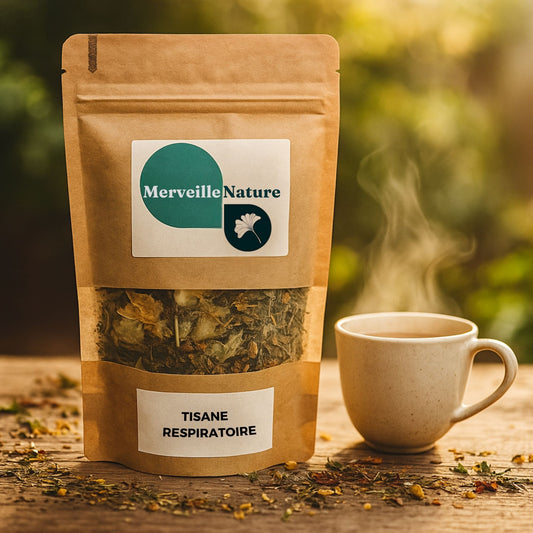
Discover our Respiratory Herbal Tea – Blend of plants for the respiratory tract and immunity
Our Respiratory Herbal Tea is a synergy of medicinal plants carefully selected to naturally support the respiratory tract, soothe the throat and accompany the body during periods of winter vulnerability.
Ideal for colds, chills, mild coughs or respiratory discomfort, it offers a gentle, aromatic and deeply comforting infusion.

Its benefits
✔️ Naturally supports the respiratory tract
✔️ Contributes to the proper functioning of immune defenses
✔️ Provides antioxidant and soothing properties
✔️ Offers a warm and comforting infusion in winter
Remedy n°2: Steam inhalation to clear the respiratory tract
Steam inhalation is a simple and particularly effective natural remedy for relieving a stuffy nose, sinusitis, cold or bronchial congestion. The moist heat helps to thin secretions, hydrate mucous membranes and facilitate their elimination.
How to perform an inhalation?
-
Pour very hot water into a large bowl.
-
Place your face above it (at a comfortable distance).
-
Cover your head with a towel to concentrate the steam.
-
Breathe slowly and deeply for 5 to 10 minutes.
To be practiced 1 to 2 times a day as needed.
Warm steam humidifies the throat, softens the mucous membranes and promotes faster clearing of the respiratory tract.
With which essential oils?
You can add a maximum of 2 to 3 drops of an essential oil suitable for the respiratory tract, such as:
-
Eucalyptus (radiata or globulus) – decongestant and expectorant
-
Ravintsara – antiviral and immunostimulant
-
Niaouli – respiratory cleanser
-
True Lavender – soothing and anti-inflammatory
-
Roman Chamomile – mucosal calming
⚠️ Essential oils are not recommended for young children, pregnant women and asthmatics without medical advice.
Softer alternative: dried plants
For a gentler inhalation, especially for sensitive people, prefer plants such as:
-
Thyme
-
Oregano
-
Rosemary
-
Chamomile
-
Eucalyptus leaves
They help to purify, decongest and soothe the respiratory tract while offering a progressive and well-tolerated action.
A simple, natural and deeply comforting gesture during the winter period.
Try our herbal blend for inhalation – cold, sinusitis, bronchitis
Our herbal blend for inhalation is specially designed to clear the respiratory tract, relieve coughs and promote smoother and more natural breathing. Composed of a harmonious balance of thyme, oregano, rosemary, matricaria chamomile, peppermint, sage and clove, it combines the purifying, soothing and refreshing virtues of medicinal plants.

Breathe deeply… and let nature work.
Remedy n°3: Natural syrups for coughs and respiratory tracts
Natural herbal syrups are concentrated preparations combining plant extracts with a sweet base (honey or sugar). This galenic form has several advantages: it improves the preservation of active ingredients, masks the bitterness of certain plants and facilitates their intake, especially in children.
Particularly appreciated for coughs, irritated throats or seasonal respiratory ailments, syrups provide a gentle, progressive and well-tolerated action.
Why choose honey?
When possible, it is recommended to prepare syrups with honey. In addition to its natural sweetening power, it offers its own virtues:
-
Pectoral properties
-
Soothing action on the throat
-
Toning and comforting effect
In the absence of honey, brown or whole sugar can be used. The preparation is carried out over low heat to facilitate the dissolution of the sugar while preserving the qualities of the plants.
Which plants to use in syrup?
Syrups are traditionally used to support the respiratory tract with plants such as:
-
Poppy
-
Onion
-
Elderberry
-
Violet
-
Pine
Syrups made from fruits (raspberry, blueberry, blackcurrant) have toning, refreshing and antioxidant-rich properties, ideal during periods of fatigue or seasonal changes.
A practical, effective and delicious way to integrate the benefits of plants into daily life
Try our homemade thyme syrup recipe for coughs and sore throats
Homemade thyme syrup is an essential natural remedy for relieving coughs and soothing sore throats. Thanks to thyme's antiseptic, antitussive and expectorant properties, it helps to calm coughing fits, cleanse the respiratory tract and support the body during colds.
Combined with honey, known for its soothing and pectoral virtues, this syrup becomes a gentle, effective and particularly suitable solution for children (excluding contraindications related to the age of honey) as well as sensitive people.
👉 Discover the complete step-by-step recipe here:
https://merveillenature.fr/blogs/astuces-naturelles-remedes/sirop-thym-maison-toux-gorge
A classic of family herbalism to always have on hand in winter.
Discover our complete range of natural syrups
Don't have time to prepare a homemade syrup? Our collection of artisanal herbal and fruit syrups accompanies you daily, according to your needs and the seasons.
In our range, you will find:
-
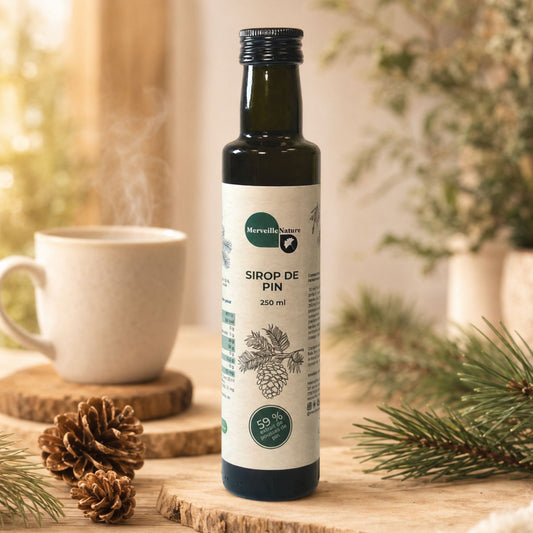
Pine shoot syrup – traditionally used to soothe coughs and clear the bronchial tubes

-
Elderberry syrup – recognized for supporting immune defenses and accompanying flu-like symptoms

-
Raspberry syrup – rich in antioxidants, toning and pleasant to taste

-
Other traditional syrups, developed for pleasure, vitality or seasonal well-being
Each recipe is inspired by the herbalist tradition and designed to combine effectiveness, naturalness and deliciousness.
A simple way to integrate the benefits of plants into your daily life, throughout the seasons.
Tips for naturally protecting your respiratory tract
✔️ Regular hydration
✔️ Daily ventilation of the home
✔️ Humidifier in case of dry air
✔️ Frequent hand washing
✔️ Diet rich in vitamin C and D
✔️ Moderate sun exposure
Conclusion: naturally supporting your respiratory tract
Nature offers powerful solutions to relieve cough naturally, clear the bronchial tubes, soothe irritated throats, and support immunity, especially during winter months. Thanks to herbal infusions, steam inhalations, and natural syrups, it is possible to adopt a comprehensive, gentle, and body-respecting approach to accompany respiratory discomforts. Taking care of your breathing daily means preserving your vitality, strengthening your natural defenses, and supporting your overall well-being.

Sources:
-
Pamplona-Roger, Dr G. Vie et Santé Encyclopedia – Guide to Medicinal Plants, Éditions Vie et Santé.
-
Ritter, Claudia. The Power of Plants Against Viruses, Éditions Ulmer.
-
Lacoste, Sophie. What if You Learned to Heal Yourself? Practical Manual for Autonomy for 100% Natural Health, Éditions Mosaïque Santé.
Under no circumstances should the information and advice offered on the MerveilleNature website replace a consultation or diagnosis made by a doctor or health professional, who are the only ones able to adequately assess your health condition.