Intestinal Candidiasis: Understanding and Restoring Natural Balance
Persistent bloating, unexplained fatigue, irresistible sugar cravings, sleep disturbances... What if your gut flora is out of balance? Intestinal candidiasis is a little-known, often underdiagnosed condition, but it is becoming increasingly common in our modern societies.

Understanding intestinal candidiasis: mechanisms and microbiota imbalance
Candidiasis is a fungal infection caused by a yeast naturally present in our body — Candida albicans. In a healthy gut, this yeast coexists in balance with the bacteria of the intestinal flora. But this balance is fragile.
When it breaks — following a diet too rich in sugar, antibiotic use, or chronic stress — the yeast can proliferate and take on a pathogenic form. It then lines the intestinal mucosa like a spiderweb and, if the intestinal wall is porous, can spread to other parts of the body.
The different forms of candidiasis
Candidiasis can manifest in different forms depending on where Candida settles:
-
Intestinal — the most frequent and often the least identified
-
Oral — thrush, mouth irritations
-
Vaginal — recurrent gynecological yeast infection
-
Cerebral — memory and concentration problems
-
Articular or urinary — in the most advanced cases
Symptoms and warning signs to watch out for
Intestinal candidiasis is often difficult to identify because its symptoms are numerous and varied. Among the most frequent signs:
-
Significant and recurrent bloating
-
Unexplained chronic fatigue
-
Irresistible sugar cravings — Candida feeds on sugar and stimulates these cravings
-
Difficulty concentrating and memory problems
-
Recurrent infections — ENT, gynecological, urinary
-
Sleep disturbances
-
Unexplained weight gain
💡 If you recognize yourself in several of these symptoms, talk to your doctor — an assessment can help identify candidiasis.
Diet: the central lever for rebalancing
Diet plays a fundamental role in rebalancing the intestinal flora. As Candida albicans primarily feeds on sugars, the goal is to cut off its food supply while promoting good bacteria.
Foods to limit strictly
-
Refined sugars — candies, pastries, confectionery, sodas, fruit juices
-
High glycemic index carbohydrates — white bread, pasta, pizza, commercial cereals
-
Lactose — milk, cheeses, animal dairy products
-
Foods rich in mold and yeast — beer, wine, cider, aged cheeses, smoked meats, dried and overly ripe fruits
-
Alcohol in all its forms
Foods to favor
-
Natural antifungal foods — fresh garlic, onion, lemon, cinnamon, clove, oregano, thyme, turmeric, rosemary, lemon balm, sage
-
Virgin coconut oil — rich in caprylic acid with recognized antifungal properties
-
Prebiotic foods — garlic, onion, leek, artichoke, asparagus, chicory, Jerusalem artichoke, green banana
-
Healthy proteins — organic eggs, legumes, unprocessed fresh meat and fish
-
Whole grains — basmati rice, quinoa, millet, amaranth
💡 Practical advice: eat calmly, chewing thoroughly — digestion begins in the mouth.
Plants that are allies for gut flora
Certain plants are known for their natural antifungal properties and can help normalize intestinal flora. Here are those most frequently mentioned in phytotherapy literature in this context.
Thyme (Thymus vulgaris)
Thyme is particularly rich in thymol — a compound with powerful antiseptic and antifungal properties. It acts directly on pathogenic yeasts while supporting digestive and respiratory health. It is one of the most accessible and effective plants to start with.
Oregano (Origanum vulgare)
Oregano contains carvacrol and thymol — two of the best-documented antifungal compounds in herbal literature. Combined with thyme, it creates a powerful synergy. Using oregano generously in cooking also allows you to enjoy its benefits daily, simply and pleasantly.
Wild Garlic (Allium ursinum)
A wild cousin of common garlic, wild garlic contains allicin — known for its natural antifungal and prebiotic properties. It nourishes the good bacteria in the gut flora while acting on pathogenic yeasts.
Dried wild garlic can also be used in cooking to enhance your dishes — salads, soups, pasta, omelets — and enjoy its benefits daily without extra effort.
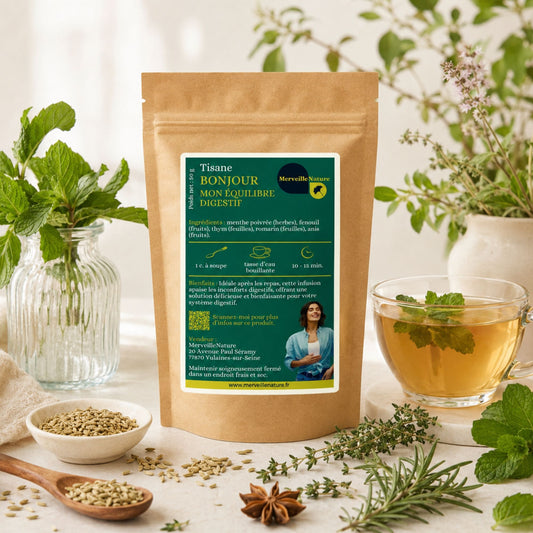
Our "Digestive Balance" blend — the DIY recipe
These three antifungal plants combined form a remarkable natural synergy. We have added chamomile matricaria for two essential reasons: its soothing properties on irritated digestive mucous membranes — often weakened in cases of candidiasis — and its sweet note which makes the herbal tea much more pleasant to drink daily.
Composition for approximately 50 g:
-
4 tablespoons of thyme
-
3 tablespoons of oregano
-
1 tablespoon of wild garlic
-
1 tablespoon of chamomile matricaria
Preparation of the blend: Mix thoroughly and store in an airtight jar away from light.
For one cup (250 ml):
-
Pour 1 level tablespoon of the blend into a cup
-
Add 250 ml of simmering water
-
Cover and let infuse for 10 to 12 minutes
-
Filter and enjoy hot
Usage advice: 1 to 2 cups per day, as part of a balanced diet.
Natural supplements mentioned in phytotherapy
Grapefruit Seed Extract (GSE)
GSE is one of the most mentioned supplements in phytotherapy for rebalancing gut flora. A powerful antifungal, antibacterial, and natural immune support, it acts on several levels.
Its most remarkable action concerns the biofilms formed by Candida albicans — these protective layers that the yeast builds over time, allowing it to penetrate deeper and deeper into intestinal tissues, making it difficult to reach. GSE helps to weaken these biofilms, making Candida much more susceptible to the action of antifungal plants used in parallel.
Probiotics and prebiotics
Once the imbalance is treated, reseeding the intestinal flora with quality probiotics is an essential step to consolidate rebalancing and prevent recurrence.
Key points to remember
-
Intestinal candidiasis is a condition that takes time — from 6 months to 2 years depending on how long the problem has existed
-
Diet is the primary lever — eliminating sugars is essential
-
Plants can support digestive comfort in addition to medical management
-
Supporting flora with probiotics and prebiotics is essential
-
Medical follow-up is essential for proper diagnosis and adapted support

Our additional resources
👉 Ginger: digestion and immunity
👉 Boost your energy with a detox cure!
Sources:
- Plantes & Santé, No. 242 — February 2023, "Make peace with your intestines — Crohn's disease, intolerances, dysbiosis… Effective solutions"
- Michel Pierre & Caroline Gayet, The Secrets of my Herbalism, InterEditions
- Michel Pierre & Caroline Gayet, My Herbalism Bible, Leduc
Under no circumstances can the information and advice offered on MerveilleNature replace a medical consultation. This information is provided for educational purposes and is based on traditional uses recognized in herbalism. Always consult your doctor for a diagnosis and appropriate support.