Diarrhea: how to regain digestive comfort
Diarrhea affects everyone at some point: a bad meal, a seasonal virus, a period of intense stress... Loose stools, frequent urgency, abdominal cramps—it's an inconvenience that's as common as it is uncomfortable, but one that deserves proper management.
At MerveilleNature, we believe in an educational, holistic, and benevolent approach: understanding what's happening in your body, reacting with the right actions, and knowing when to consult a professional.
Discover our natural remedies to gently navigate an episode of diarrhea and quickly regain your digestive comfort.

Understanding Diarrhea: Primarily a Defense Mechanism
Diarrhea is characterized by excessively liquid and frequent stools. Essentially, the intestinal lining has not had enough time to reabsorb sufficient water from the food bolus before its evacuation.
Several possible causes:
-
A virus or bacterium (gastroenteritis, traveler's diarrhea) that the body tries to eliminate as quickly as possible
-
Chronic intestinal inflammation (Crohn's disease, ulcerative colitis)
-
Dysbiosis: an imbalance of the gut microbiota
-
Certain foods (gluten, dairy products) that weaken the intestinal wall and cause hyperpermeability ("leaky gut")
-
Stress, which directly affects the vagus nerve and accelerates transit
An important point to keep in mind: diarrhea is not "the problem" itself. It is a natural defense reaction of the body to quickly eliminate a bacterium, toxin, or virus. The goal is therefore not always to stop it immediately, but to manage it intelligently.
Preventing Gastroenteritis: Everyday Good Practices
Gastroenteritis, the most common cause of temporary diarrhea, is most often transmitted... by dirty hands. The responsible viruses (rotavirus, norovirus) can survive for a long time on surfaces: doorknobs, faucets, screens, coins.
-
Wash your hands several times a day with soap and water—the simplest gesture remains the most effective
-
When traveling, use an alcohol-based gel with essential oils
-
People prone to seasonal infections can take a curative course of blackcurrant buds (Ribes nigrum) or agrimony tea (Agrimonia eupatoria), a dual-purpose plant that is antiviral and antidiarrheal, and also heals mucous membranes
First Actions in Case of Diarrhea
Resting the Intestines
At the first symptoms, a short fast of about 24 hours allows the intestinal mucous membranes to rest. Drink plenty of fluids (rice water, salty vegetable broth), but avoid tea, coffee, and sodas, as some of their components accelerate transit. Reintroduce food gently as improvement occurs: potato soup, cabbage, lean fish.
Monitoring for Dehydration
This is the most important point of vigilance, especially in children and the elderly. Signs to watch for: dry mouth and skin (a pinched skin fold that doesn't quickly return to normal is a clear sign), slightly sunken eyes, irritability or lethargy, headaches, cold extremities, accelerated heart rate. In infants, a sunken fontanelle should immediately raise alarm.
Herbs and Natural Remedies for Diarrhea
Astringent Plants, Rich in Tannins
Blackberry leaf, wild strawberry leaf, blueberry leaf and fruit, yarrow, oak bark: these plants constrict and dry out mucous membranes, which quickly helps to limit liquid stools.
Instructions for use: Infuse 1 tablespoon of herbs in 250 ml of water, covered, for 15 minutes. Filter and drink 4 to 5 times a day, for 1 to 5 days maximum.
Dried blueberry berries are particularly effective: their dark blue pigment (anthocyanosides) and richness in tannins make them a recognized antidiarrheal, also suitable for young children. Use 50 g of dried berries infused for 20 minutes over low heat in 1 liter of water, to be drunk throughout the day.

Adsorbents: Activated Charcoal
Activated charcoal absorbs excess fluids in stools and neutralizes unwanted bacteria in the process—one gram of charcoal offers a spectacular absorption surface of between 400 and 2,500 m²! Take 4 to 6 capsules per day, or the equivalent of one teaspoon.
⚠️ Activated charcoal should always be taken separately from other treatments or birth control pills, as it can reduce their absorption.
In Case of Infectious Origin
Certain essential oils have interesting antimicrobial action. A possible synergy: 1 drop of compact oregano essential oil, 1 drop of thyme thujanol essential oil, and 1 drop of organic lemon essential oil, placed on a neutral tablet, to be swallowed 3 times a day for 1 to 5 days (from 12 years old, excluding pregnancy).
In Case of Stress-Related Diarrhea
Stress directly affects transit—lemon balm, as an infusion or hydrolat, is a recognized anti-stress plant known for its digestive and antispasmodic action. Heart coherence exercises, combined with inhaling soothing essential oils (lavender, ylang-ylang, petitgrain bigarade) complement this approach well.
To Relieve Associated Symptoms
-
Nausea: crush a little fresh ginger at the bottom of a cup, pour in boiled water, let steep, then chew the pieces after drinking
-
Intestinal hyperpermeability (often linked to dysbiosis): boswellia and ginger are recognized allies
-
Blond psyllium: its mucilages swell on contact with water and retain excess liquid. A small spoonful with very little water after each episode helps slow down diarrhea—the same plant is also useful for constipation, in the opposite way!
-
In the evening, a warm hot water bottle on the stomach helps soothe intestinal contractions
What to Eat During and After a Diarrhea Episode
Certain simple foods help to constrict transit and retain water:
-
Grated apple and white rice, particularly well tolerated
-
Carrot soup: cook carrots until completely soft, then mash them lightly salted with their cooking water
-
Rice water: boil 2 handfuls of rice in 1 liter of water, lightly salt at the end of cooking, filter. Drink in cups throughout the day

Gentle Recovery After the Crisis
Once the episode has passed, your intestinal mucous membranes deserve some attention, especially after antibiotic treatment:
-
Walnut bud macerate helps to calm, heal, and soothe the intestinal flora
-
A combination of probiotics + grapefruit seed extract promotes the return of good bacteria while limiting pathogens
-
Carrot juice, a natural intestinal healing agent, and soothing aloe vera gel complement this recovery phase well
When to Consult a Doctor?
Diarrhea is usually benign and temporary, but certain signs should prompt you to consult a doctor quickly, especially in young children and the elderly, who are more vulnerable to dehydration:
-
Diarrhea that persists beyond 2-3 days despite the above measures
-
Marked signs of dehydration (see above)
-
High fever, presence of blood in stools
-
Intense abdominal pain
-
Diarrhea in an infant: consult without delay, dehydration can be rapid and serious at this age
Conclusion
Diarrhea is never pleasant, but it generally resolves well by supporting your body rather than trying to stop it at all costs. Hydration, astringent or adsorbent plants depending on the cause, adapted diet, and particular vigilance for signs of dehydration: these are the keys to a rapid and gentle recovery.
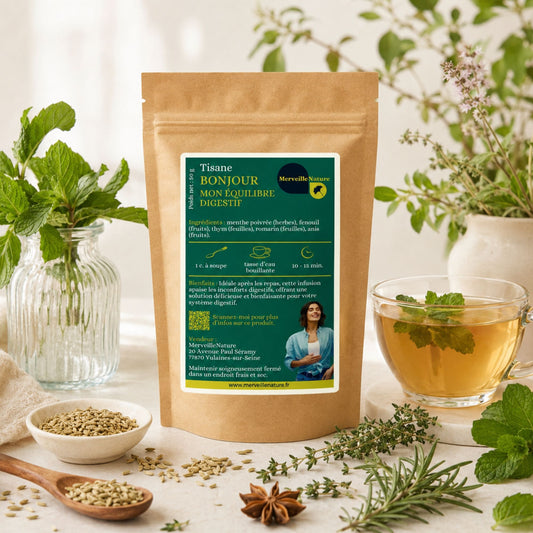
💡 MerveilleNature Tip: for daily digestive comfort, consider our BONJOUR MON ÉQUILIBRE DIGESTIF Herbal Tea, designed to support your digestion throughout the year.

Sources:
- Vegetables against gastroenteritis – Plantes & Santé
- Transit, reflux… Retrouvez une digestion apaisée, Plantes & Santé, n°270, September 2025
- Les secrets de mon herboristerie, Caroline Gayet and Michel Pierre, InterEditions
- Et si vous appreniez à vous soigner vous-même ? Manuel pratique d'autonomie pour une santé 100 % naturelle, Sophie Lacoste, Éditions Mosaïque-Santé
Under no circumstances should the information and advice offered on the MerveilleNature website replace a consultation or diagnosis formulated by a doctor or health professional, who alone are able to adequately assess your state of health.mer